TANF Government Shutdown: Will Cash Assistance Continue if Congress Misses Funding?
Reported by The Capitol Watch Editorial Team. Review our editorial standards, corrections policy, and newsroom mission.
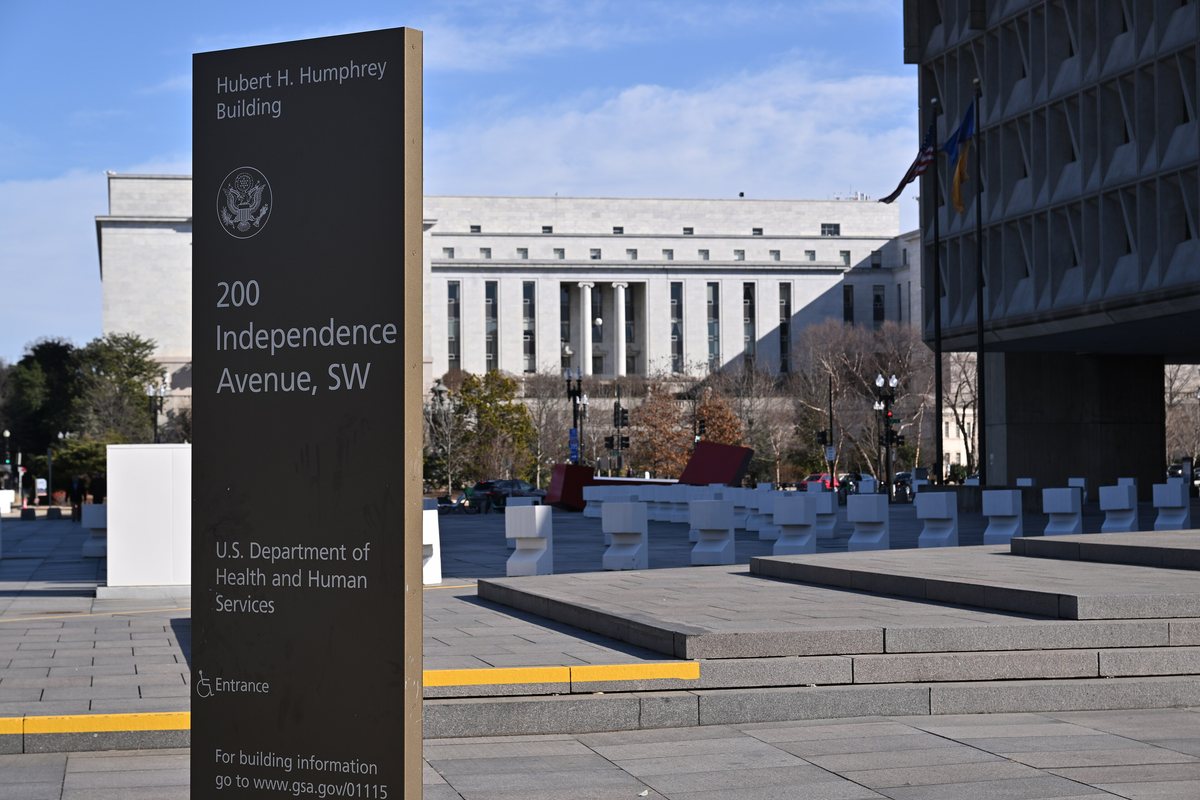
Image credit: G. Edward Johnson via Wikimedia Commons, CC BY 4.0.
TANF government shutdown outcomes are usually not all-or-nothing because states can often keep cash assistance going for a period with carryover funds or state dollars. The key variable is not the headline in Washington, but how much runway your state has before new federal block-grant money is needed.
TANF government shutdown risk is different from the risk families face in SNAP, WIC, or Section 8 housing because Temporary Assistance for Needy Families is a state-run block grant, not a single nationwide payment stream. That means cash assistance government shutdown answers are usually local first and federal second: some states can keep paying for a while, some tighten administration quickly, and some warn families early that a long lapse could interrupt benefits, work supports, or emergency aid.
That structure creates confusion because people hear two statements that both sound true: TANF is federally funded, and states decide whether payments continue. Both can be right at the same time. Congress authorizes the core federal money, but states decide how to use cash reserves, maintenance-of-effort funds, and prior-year balances when Washington stops sending new dollars on schedule. Families who rely on TANF do not need a civics lecture. They need to know whether the next benefit will load, whether work requirements still apply, and what steps protect rent, utilities, and food if the answer turns uncertain.
This guide is built around that practical question. If you need the broad political status first, start with our government shutdown tracker. If your household also depends on food assistance or school meal programs, pair this page with our school lunch shutdown guide and our shutdown unemployment benefits explainer so you can plan the full month rather than one program at a time.
Does TANF stop during a government shutdown?
Usually not immediately, but it can if a shutdown lasts long enough and a state runs out of flexibility. TANF is structured as a federal block grant with substantial state discretion, so early shutdown weeks often look stable on the surface while state agencies decide how much prior funding they can use. The real risk is timing. A one-week lapse and a six-week lapse are not the same problem. In the first case, many states can bridge the gap. In the second, states may delay new approvals, freeze parts of emergency assistance, narrow vendor payments, or warn families that future deposits are less certain.
That is why the right question is not just "Will TANF continue?" It is "How long can my state continue TANF before missing a new federal payment becomes operationally painful?" States do not all answer that question the same way. They have different reserve levels, different caseloads, and different choices about whether to preserve cash assistance first, child care support first, or administrative operations first.
| Shutdown phase | Likely TANF status | Main family risk | Best action |
|---|---|---|---|
| Days 1-7 | Most states still pay as scheduled | Low but uncertain | Confirm next load date and save notices |
| Week 2-3 | State warnings may increase | Moderate | Ask about emergency aid and office staffing |
| Week 4+ | More states face funding stress | High | Protect rent, utilities, and food backup plans |
| After reopening | Payments may resume normally but admin backlogs remain | Moderate | Check recertification, work notices, and missed documents |
Why TANF shutdown risk is more state-specific than SNAP or Social Security
The first thing families need to understand is structural, not partisan. Social Security and SSI payments are managed through a federal benefit system that people intuitively view as national. TANF is not. HHS explains that the federal government provides grants to states, but states decide program design, payment size, service mix, and eligibility rules. Congressional Research Service primers describe TANF as a fixed block grant that gives states wide latitude over how to deploy funds. That flexibility is why one state's welfare benefits government shutdown message may be reassuring while another state uses much more cautious language.
There is a second layer to the problem: TANF is not only about monthly cash assistance. States also use TANF dollars for work supports, child care, short-term nonrecurrent aid, and administrative functions. So when state budgets get tighter during a shutdown, agencies are not always deciding whether to keep one single check going. They are deciding which parts of the TANF ecosystem are most important to keep fully operating. A state may preserve core cash benefits while letting application processing slow. Another may keep emergency diversion funds going but delay some supportive services. Families notice the outcome as friction long before they see a formal notice saying benefits have ended.
Image credit: derived crop from a G. Edward Johnson Wikimedia Commons photo, CC BY 4.0.
Will cash assistance still load during a shutdown?
In many cases, yes at first. But families should treat the next deposit date as something to verify, not assume. When people ask whether TANF cash assistance still loads during a shutdown, they are really asking whether their state has enough money and operational continuity to process the next cycle on time. States that already have federal TANF dollars in hand, or that are willing to use state maintenance-of-effort resources, can often keep deposits moving at least temporarily. States operating with less cushion may shift quickly into contingency language.
Operationally, families should watch three things. First, whether the state agency says ongoing cases will continue without interruption. Second, whether new applications or redeterminations are slowing. Third, whether call centers and local offices are warning of reduced staffing. A benefit can still load on schedule while the rest of the system begins to lag. That matters because missed paperwork, work activity reporting, or address updates can create downstream problems even when the next payment arrives.
What a stable message looks like
A comparatively stable state notice usually says current cash assistance benefits will continue, at least for now, and names the next cycle or date range. It may still warn that a prolonged shutdown could change that outlook. Families should screenshot that notice because the wording often changes as the shutdown drags on.
What a higher-risk message looks like
Higher-risk language usually avoids promising future months. Instead, it says payments will continue while funds remain available, or until additional guidance is issued. It may also mention delayed interviews, reduced office hours, or prioritization of existing cases over new approvals. Those are signs to move from passive monitoring to active contingency planning.
Planning Signal
If your state cannot confirm the next TANF benefit date in writing, assume you need a seven- to fourteen-day backup plan for rent, groceries, and utility cash flow.
Can states keep paying TANF during a shutdown?
Yes, many can for some period. The important phrase is "for some period." State flexibility comes from several places: prior-year federal TANF balances, state maintenance-of-effort funding, and choices about program sequencing. County and state budget guidance published during prior shutdowns has repeatedly noted that TANF can often continue when states use old federal funds or nonfederal dollars and seek reimbursement later if authorized. That does not mean every state has the same runway. A high-caseload state can burn through available flexibility faster than a state with lower caseloads or stronger reserves.
This is also why families should not rely on a viral post from another state. One Reddit thread or social screenshot saying "TANF is safe" or "TANF is cut off" is almost useless unless it names your state and cites the responsible agency. Shutdowns amplify rumor because the underlying structure is genuinely complex. The federal program is national, but the practical experience is state-defined.
State funding choices that matter most
- How much unspent federal TANF funding the state already controls.
- Whether state leaders are willing to use maintenance-of-effort or general funds to bridge a lapse.
- How the state prioritizes core cash assistance versus administrative and supportive services.
- Whether the state has separate emergency assistance or utility-relief options it can activate quickly.
For households, these are not abstract budget questions. They determine whether the state can keep the cash benefit steady, whether emergency diversion remains available, and whether office staff can process recertifications and sanctions on time. Even a state that keeps paying can still create friction if it cannot answer phones or resolve documents quickly.
How TANF spending structure changes shutdown exposure
TANF is broader than most households realize. A well-known older expenditure chart on Wikimedia, based on Center on Budget and Policy Priorities data, shows that only part of total TANF spending goes to direct cash assistance, with large shares also flowing to other services, child care, and work supports. The exact percentages change over time and by state, but the strategic point remains useful: TANF is not a single-check program in the way many families imagine it. When states face a shutdown, they may have to decide which pieces of that broader spending mix to protect most aggressively.
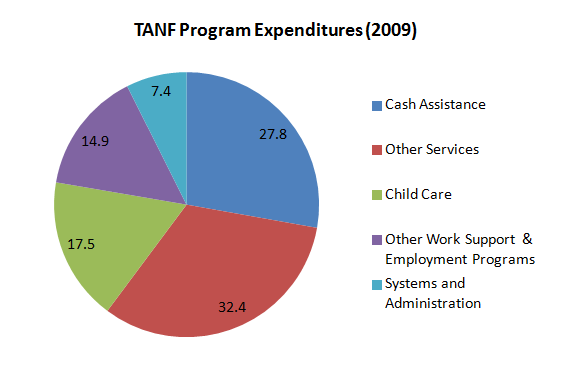
Image credit: Ylor916 via Wikimedia Commons, CC BY-SA 3.0.
That matters for two reasons. First, some states may preserve monthly benefits while narrowing other services that families still depend on, such as transportation help or work-related support. Second, application bottlenecks can emerge even when current recipients remain protected for a while. In practical terms, current recipients and new applicants may experience the same shutdown very differently. Ongoing cases can keep loading while new approvals sit longer in the queue.
What should families do if TANF benefits are delayed?
Move quickly, but in sequence. Families usually lose the most ground when they spend the first week waiting for clarity instead of documenting the problem and protecting their highest-risk bills. A delayed TANF deposit does not just affect cash on hand. It can trigger cascading late fees, overdrafts, missed transportation to work, and harder tradeoffs at the grocery store. The right response is not panic. It is disciplined triage.
First 24-hour checklist
- Check your state benefits portal, app, text alerts, and agency homepage for a written update.
- Screenshot the absence of a deposit and any official language about delays.
- Call or message the local TANF office and ask whether current cases, new approvals, and emergency assistance are still operating normally.
- List bills due in the next ten days, starting with rent, electricity, medication, phone, and transportation.
- If your household also relies on food benefits, verify your SNAP and WIC status separately instead of assuming they move with TANF.
Next 72-hour checklist
- Ask about state or county emergency cash, diversion, or utility-assistance programs.
- Contact your landlord or utility provider before the due date if the TANF deposit is the reason payment may be late.
- Build a one-week spending plan based only on money that has already arrived.
- If an office closure or work-reporting problem caused the delay, document every attempt you made to comply.
- Use local 2-1-1 or county human-services listings to identify backup food and rent resources.
Documentation is not optional here. It can matter later if the state asks why work activities were missed, why an appointment was not completed, or why a sanction should not apply. Keep a folder with screenshots, notices, call logs, and names of any agency staff you spoke with.
Do work requirements and recertifications still matter during a shutdown?
Usually yes, but administration can become uneven. TANF work requirements, appointments, and recertification duties do not automatically disappear because Congress misses a funding deadline. The risk is that families may still be expected to comply while offices or contracted providers are slower to answer questions. That mismatch is one of the most damaging shutdown side effects for low-income households, because people can be penalized for failing to complete steps in a system that is functioning less smoothly than normal.
Families should respond by over-documenting. If a work activity site is closed, if child care support is disrupted, or if you cannot reach a caseworker, write down the date, time, and attempted contact. Save screenshots of error pages or voicemail systems. If your state later tries to enforce a sanction or close a case, contemporaneous records give you a much stronger argument that you tried to comply in good faith.
| Issue | What may still continue | What may slow first | Best household response |
|---|---|---|---|
| Current cash benefits | Existing monthly deposits | Future-month certainty | Verify each load date |
| New applications | Basic intake | Interviews and approvals | Apply early and keep proof |
| Work activities | Reporting rules | Provider coordination | Document every obstacle |
| Emergency assistance | Some local relief | Discretionary approvals | Ask about county backup funds |
How TANF compares with other shutdown-sensitive family programs
TANF is one of the clearest examples of why "government benefits during a shutdown" is too broad a phrase to be useful. WIC often turns on short-term state balances and federal nutrition funding. Head Start can face program-level closure risk when payroll and grants tighten. School meal programs often continue longer because school districts have operating and reimbursement mechanisms that behave differently. TANF sits in the middle: more state-flexible than many households expect, but still vulnerable when a long shutdown blocks new federal money.
That makes TANF planning especially important for single-parent households juggling several systems at once. A family that loses or fears losing TANF cash may also be watching child care arrangements, utility arrears, transportation costs, and work participation rules. The best shutdown plan is not program-by-program panic. It is an integrated household plan that separates direct cash, food access, housing stability, and compliance obligations.
FAQ: TANF government shutdown questions
Does TANF stop during a government shutdown?
Not always. TANF can continue for a time if states use prior-year federal balances or state funds, but a prolonged shutdown can raise the risk of delayed cash assistance or slower case processing.
Will cash assistance still load during a shutdown?
Often yes in the early phase, but only your state can confirm the next deposit cycle. Families should verify the date directly rather than assuming a national headline answers it.
Why does TANF depend on state funding decisions?
TANF is a flexible block grant. States set many program rules and decide how to use available federal and state resources, so shutdown continuity depends heavily on local budget choices.
What should families do if TANF benefits are delayed?
Save written proof, contact the local office immediately, ask about emergency assistance, and protect rent, utility, and food cash flow in the first 72 hours. Early documentation matters if a case issue appears later.
Can states keep paying TANF during a shutdown?
Yes, some can for a period. The main variable is how much fiscal runway the state has before it needs a new federal payment or chooses to preserve funds for other services.