US and Israel Launch Strikes on Iran
Reported by The Capitol Watch Editorial Team. Review our editorial standards, corrections policy, and newsroom mission.
SUMMARY
On February 28, 2026, the US and Israel launch strikes on Iran in a coordinated military operation codenamed Operation Shield of Judah, targeting nuclear facilities, military installations, and regime sites across Tehran, Isfahan, Qom, Karaj, and Kermanshah. President Trump confirmed "major combat operations" while Israel declared a 48-hour state of emergency, with Iran warning of a "crushing" retaliatory response as oil prices surged and global markets reacted.
KEY TAKEAWAYS
- Coordinated US-Israeli operation: The US and Israel launch strikes on Iran targeting nuclear infrastructure at Isfahan, Natanz, and Fordo, plus missile sites at Shahrud and regime facilities in Tehran (NBC News).
- Trump declares "major combat operations": President Trump confirmed US military involvement, stating the goal is to "defend the American people by eliminating imminent threats from the Iranian regime" and signaling regime change ambitions (Times of Israel).
- Israel declares 48-hour emergency: Defense Minister Israel Katz called it a "preemptive attack" to "remove threats," with civilian airspace closed and hospitals moved underground (NPR).
- Iran closes airspace, warns of retaliation: Supreme Leader Khamenei moved to a secure location. Iranian officials warned of a "crushing" response (Al Jazeera).
- Markets rocked: Oil surged past $66/barrel, gold reclaimed $5,000/oz, and analysts warn Strait of Hormuz closure could push crude beyond $100 (CNBC).
The US and Israel launch strikes on Iran in the early morning hours of February 28, 2026, in what both governments described as a coordinated military operation targeting the Iranian regime's nuclear program, ballistic missile capabilities, and military infrastructure. The joint operation, codenamed Operation Shield of Judah, marks one of the most significant military escalations in the Middle East in decades and the first direct US combat operations against Iran.
This article compiles verified reporting from NBC News, BBC News, CNN, NPR, Al Jazeera, and other major outlets to provide the most comprehensive account of the developing situation.
What Happened: Operation Shield of Judah
In the early hours of Saturday, February 28, 2026, the Israeli Defense Forces and the United States military launched a large-scale coordinated attack on the Islamic Republic of Iran. The operation targeted multiple cities across Iran, including Tehran, Isfahan, Qom, Karaj, and Kermanshah, according to reports from Al Jazeera and Gulf News.
The operation was initially codenamed Shield of Judah. Israeli Prime Minister Benjamin Netanyahu later renamed the Israeli component to "Lion's Roar" (Sha'agat Aryeh), as reported by the Times of Israel.
Israeli Defense Minister Israel Katz described the operation as a "preemptive attack" intended to "remove threats to the State of Israel," according to Euronews. US officials confirmed to NBC News that the strikes were "significant" and "not small strikes," with dozens of US strikes being carried out by attack planes from carrier groups stationed in the region.
US and Israel Launch Strikes on Iran: Timeline of Events
The following timeline is compiled from live reporting by NBC News, BBC, NPR, and Al Jazeera:
| Time (Local/ET) | Event | Source |
|---|---|---|
| ~8:15 AM Israel time | Air raid sirens sound across Israel; civilians directed to shelters | NPR |
| Shortly after | Defense Minister Katz announces "preemptive attack" on Iran to "remove threats" | Euronews |
| Morning (Iran time) | First explosions reported in central Tehran; three blasts in Keshvardoost and Pasteur districts near Khamenei's residence | Gulf News |
| Morning | Explosions spread to Isfahan, Qom, Karaj, and Kermanshah | Al Jazeera |
| Morning | Iran closes all national airspace "until further notice" | NBC News |
| ~2:16 AM ET | NPR publishes first US wire report confirming joint US-Israeli operation | NPR |
| Shortly after | President Trump releases video: "The United States military began major combat operations in Iran" | NBC News |
| Morning | Israel declares 48-hour nationwide state of emergency; civilian airspace closed | NPR |
| Morning | Cyberattacks disrupt Iranian news agencies and mobile applications | Times of Israel |
| Ongoing | Khamenei moved to secure location; Iran warns of "crushing" response | Jerusalem Post |
A security source briefed on the operation told the Times of Israel that the initial phase is planned to last approximately four days. The timing of morning strikes was reportedly designed to surprise Iranian defenders who would not anticipate daytime attacks.
What Was Targeted in the Strikes
According to Israeli officials cited by Gulf News and Jerusalem Post, the strikes targeted "regime and military sites including ballistic missiles." Reporting from multiple outlets identifies the following target categories:
Nuclear Infrastructure
- Isfahan: Home to Iran's uranium conversion facility and nuclear research centers
- Natanz: Iran's primary uranium enrichment facility, located underground
- Fordo (Fordow): A deeply buried enrichment plant near Qom, previously targeted in the June 2025 Operation Midnight Hammer
Military and Missile Sites
- Shahrud: Ballistic missile production complex in northeastern Iran
- Defense and Intelligence Ministry installations in Tehran
- Homes of senior military officials and ministers, according to Channel 12 via Times of Israel
Regime Facilities in Tehran
- Supreme Leader's compound: Seven missile impacts were documented in Tehran's Keshvardoost and Pasteur districts, near the offices and residence of Ayatollah Ali Khamenei (Gulf News)
- Presidential facilities and National Security Council buildings
- Iranian Intelligence Ministry headquarters
- Iranian Atomic Energy Organization facilities
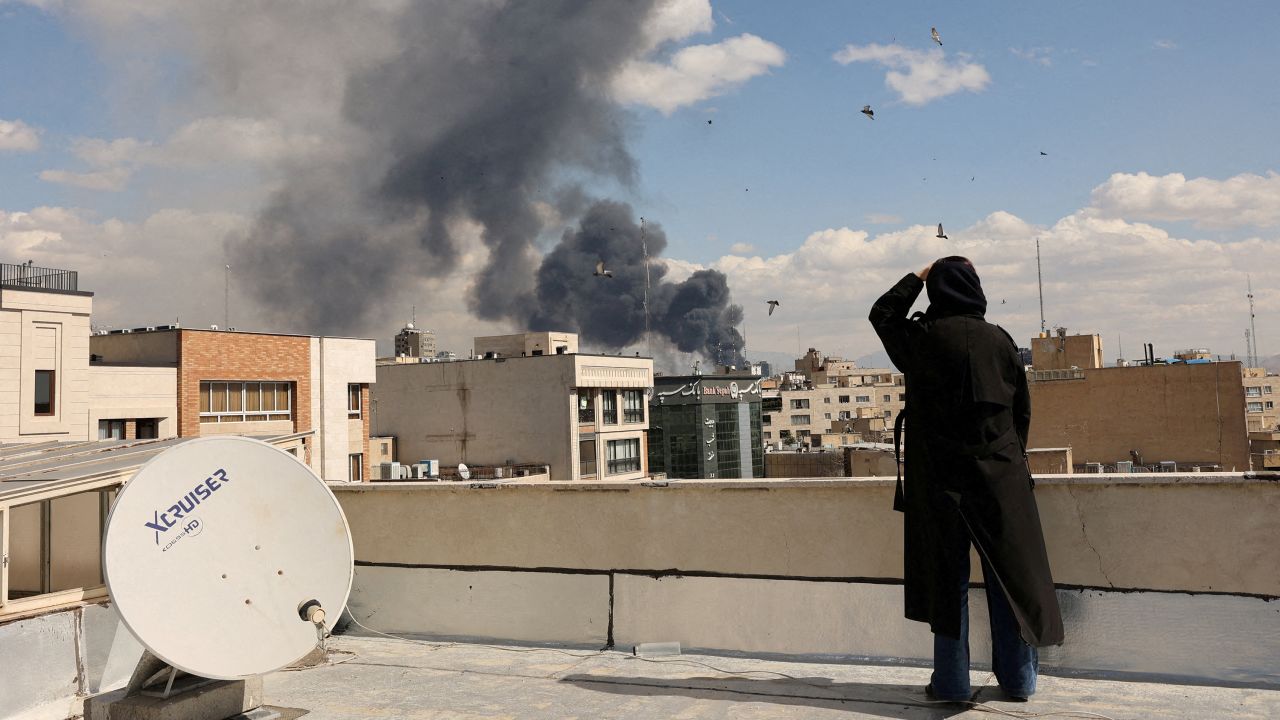
The first apparent strike occurred near the offices of Supreme Leader Ayatollah Ali Khamenei in downtown Tehran, according to Euronews. Thick smoke was seen rising from the city's downtown area, with Iranian media confirming three initial explosions.
Trump Confirms US Military Operations in Iran
President Donald Trump confirmed American military involvement in a video message posted to Truth Social, declaring: "A short time ago, the United States military began major combat operations in Iran."
According to NBC News, Trump stated: "Our objective is to defend the American people by eliminating imminent threats from the Iranian regime, a vicious group of very hard, terrible people." He cited Iran's nuclear program as the primary justification, referencing a previous June 2025 operation (Operation Midnight Hammer) that had targeted Fordow, Natanz, and Isfahan facilities.
Trump explicitly framed the operation with regime change ambitions. According to the Times of Israel, the president told Iranian citizens: "The hour of your freedom is at hand" and "When we are finished, take over your government." He also offered Iranian military forces immunity if they laid down weapons, warning they would "face certain death" otherwise.
Trump declared: "It has always been the policy of the United States...that this terrorist regime can never have a nuclear weapon." He added that the operation aimed to:
- Destroy Iran's missile capabilities
- Eliminate nuclear weapons development potential
- Neutralize regional terrorist proxies
- Prevent threats to US interests and allies
US officials told Reuters that the strikes were being carried out by air and sea, with dozens of US strikes launched from attack planes based at Middle East installations and from one or more aircraft carriers. The US had previously deployed the USS Ford carrier strike group to the region earlier in February, and the US ambassador to Israel had warned embassy staff to leave the country, according to NBC News.
Israel Declares Preemptive Strike and State of Emergency
Israeli Defense Minister Israel Katz formally announced the strikes, describing them as a "preemptive attack" designed to "remove threats to the State of Israel," as reported by Euronews.
Katz also declared a "special and permanent state of emergency across Israel" and warned: "As a result, a missile and drone attack against the State of Israel and its civilian population is expected in the immediate future."
Israel undertook significant defensive preparations simultaneously with the offensive operation:
- 48-hour nationwide state of emergency declared
- All civilian airspace closed to passenger flights
- Civil defense protocols activated -- air raid sirens sounded across the country starting at approximately 8:15 AM local time, directing citizens to shelters (NPR)
- Hospitals moved underground: Tel Aviv's Sourasky Medical Center and Sheba Medical Center relocated operations to protected facilities. Outpatient care and elective procedures were cancelled (Gulf News)
- Cyberattacks launched concurrently to disrupt Iranian news agencies and mobile applications (Times of Israel)
The operation followed Trump's State of the Union address earlier in February, in which he accused Iran of "sinister nuclear ambitions," and weeks of failed diplomatic negotiations over uranium enrichment and nuclear weapons development (NBC News).
Iran's Response and Threats of Retaliation
Iran's immediate responses, as compiled from Al Jazeera, Gulf News, and NBC News:
- Airspace closed: Iran shut down all national airspace "until further notice"
- Leadership secured: Supreme Leader Ayatollah Ali Khamenei was moved to a secure location (Jerusalem Post)
- State media confirmed "aerial aggression" without providing immediate casualty reports. Iranian state television acknowledged the blasts (Gulf News)
- President Pezeshkian was reported unharmed, according to state media
- Cell phone signals were cut in some Tehran areas (NBC News)
An Iranian parliament member responded defiantly: "Now you've started down a path whose end is no longer in your hands," according to NBC News. Iranian officials have warned of a "crushing" retaliatory response, with official sources saying retaliation was being prepared, which could include missile strikes against Israel.
The nature and scale of Iran's retaliation remains the central unknown of this developing crisis. Iran possesses an arsenal of ballistic missiles capable of reaching Israel, and its proxy network -- including Hezbollah in Lebanon and Houthi forces in Yemen -- could open multiple fronts.
Global Market Impact: Oil and Financial Markets React
The strikes sent immediate shockwaves through global financial markets. According to CNBC and Yahoo Finance:
- Oil prices surged: WTI crude pushed past $66 per barrel, driven by the risk of disruption to Iran's 3.3 million barrels per day of production
- Gold climbed: Gold rose 1.2% to regain the $5,000 per ounce level as safe-haven demand intensified
- Stock markets fell: Asian and European markets declined sharply on the news, while defense and energy sector stocks rose
- Strait of Hormuz risk: Analysts warn that a closure of the Strait of Hormuz -- through which roughly 20% of global oil passes -- could push crude oil beyond $100 per barrel
Iran is OPEC's third-largest producer. Any sustained disruption to its output, or a broader conflict threatening Gulf shipping lanes, would have significant consequences for global energy prices and inflation, according to analysis from Lombard Odier via The National.
International Reactions and Regional Fallout
The strikes triggered immediate responses across the region and the world:
Regional Impact
- Iraq closed its airspace, according to Gulf News
- Kuwait suspended all flights to Iran
- US Embassy in Qatar implemented shelter-in-place protocols
- UK Embassy issued heightened travel warnings for the UAE
- The United States had assembled substantial military assets in the region prior to the strikes, including fighter jets, warships, and the USS Ford carrier strike group (Euronews)
Proxy Threat Assessment
The strikes raise the possibility of retaliation from Iran's network of regional proxies:
- Hezbollah in Lebanon has a large rocket and missile arsenal capable of striking deep into Israel
- Houthi forces in Yemen have previously attacked commercial shipping in the Red Sea and fired at Israel
- Iraqi militias with ties to Iran's Islamic Revolutionary Guard Corps (IRGC) operate near US forces in Iraq and Syria
Congressional Response
The Congressional Research Service has published an updated analysis of the Israel-Iran conflict, US strikes, and ceasefire considerations, reflecting the congressional policy debate already underway.
Background: How Tensions Escalated
The February 28 strikes did not occur in a vacuum. A series of escalatory events led to this point:
- June 2025 -- Operation Midnight Hammer: An earlier Israeli operation targeting Iran's nuclear facilities at Fordow, Natanz, and Isfahan. Trump referenced this operation in his February 28 statement (NBC News)
- Early February 2026: The US deployed the USS Ford carrier strike group to the Middle East region to pressure Iran regarding its nuclear program
- February 2026: Failed nuclear negotiations between the US and Iran. Trump expressed being "not thrilled" with Iran's negotiating conduct regarding uranium enrichment (Euronews)
- February 23, 2026: Israelis began bracing for another war as Trump publicly contemplated military strikes against Iran (Washington Post)
- State of the Union address: Trump accused Iran of "sinister nuclear ambitions" in his February 2026 address to Congress
- February 28, 2026: US and Israel launch strikes on Iran -- Operation Shield of Judah / Lion's Roar
What Reddit and Social Media Are Saying
The strikes have generated massive online discussion. Across Reddit's r/worldnews and related subreddits, users are expressing a range of reactions, according to analysis compiled by ResetEra and discussion aggregators:
- Concern over regional escalation: Many users are analyzing how the strikes could draw in additional actors including Hezbollah, Houthi rebels, and Iraqi militias, potentially triggering a wider regional war
- Debate over "preemptive" framing: Significant discussion surrounds whether the "preemptive" label is justified, with users questioning the legal basis under international law for strikes of this magnitude
- Oil price and economic fears: Economic concerns dominate practical discussions, with users debating the impact on gas prices, inflation, and the potential for a global recession if the Strait of Hormuz is disrupted
- Congressional authorization debate: Many users are questioning whether the strikes were conducted with proper congressional authorization, referencing the War Powers Resolution and the constitutional requirement for Congress to declare war
- Humanitarian concerns: Deep concern about civilian casualties in Tehran and other Iranian cities, particularly given the strikes on densely populated urban areas
On Websleuths, users are tracking the developing situation with particular attention to confirmed target identification and damage assessments as satellite imagery becomes available.
Casualties and Damage Assessment
As of publication, no confirmed casualty figures have been released by either side, according to NPR. However:
- Iranian state television confirmed "aerial aggression" without immediate casualty reports
- Seven missile impacts were documented in central Tehran districts, including residential areas near the Supreme Leader's compound (Gulf News)
- Thick smoke was visible from multiple locations across Tehran's skyline
- The strikes hit densely populated urban centers in addition to military installations, raising concern about civilian casualties
The full extent of damage and casualties is expected to become clearer as independent media gain access and satellite imagery is analyzed. This article will be updated as confirmed information becomes available.
What Happens Next
The immediate future depends on several key variables:
- Iran's retaliation: The nature, scale, and timing of Iran's promised "crushing" response will determine whether this escalates into a full-scale regional war. Iran possesses ballistic missiles capable of reaching Israel and has a network of proxies across the Middle East.
- Duration of the operation: Sources indicate the initial phase is planned for four days (Times of Israel). Whether the US and Israel extend operations beyond this window will signal their strategic objectives.
- Congressional reaction: Whether members of Congress challenge or support the strikes -- and whether the administration invokes existing authorizations or seeks new authority -- will shape the domestic political landscape.
- Strait of Hormuz: If Iran attempts to close this critical shipping lane, it could trigger a global energy crisis. Roughly 20% of the world's oil passes through the strait.
- Diplomatic channels: Whether any backchannel negotiations or ceasefire discussions emerge in the coming days.
The Middle East Institute and CSIS have both published analyses of the strategic implications. This is a developing story, and The Capitol Watch will continue to update this article as new information is confirmed.
Frequently Asked Questions: US and Israel Strikes on Iran
Why did the US and Israel launch strikes on Iran?
Israel described the strikes as a "preemptive attack" to "remove threats to the State of Israel," citing Iran's nuclear program and ballistic missile capabilities. President Trump stated the objective was to "defend the American people by eliminating imminent threats from the Iranian regime" and to prevent Iran from obtaining nuclear weapons. The strikes followed weeks of failed nuclear negotiations and a buildup of US military assets in the region.
What was targeted in the US and Israel strikes on Iran?
The strikes targeted regime and military sites across multiple Iranian cities including Tehran, Isfahan, Qom, Karaj, and Kermanshah. Specific targets included nuclear infrastructure at Isfahan, Natanz, and Fordo; missile production facilities at Shahrud; the Iranian Intelligence Ministry; the district containing Supreme Leader Khamenei's offices; presidential facilities; and homes of senior military officials.
What is Operation Shield of Judah?
Operation Shield of Judah is the codename for the joint US-Israeli military strikes on Iran launched on February 28, 2026. Israeli Prime Minister Benjamin Netanyahu later renamed the Israeli component to "Lion's Roar." The operation involves air and sea strikes from US carrier groups and Israeli forces targeting Iranian nuclear and military infrastructure.
How has Iran responded to the strikes?
Iran closed all national airspace "until further notice" and moved Supreme Leader Khamenei to a secure location. Iranian state television confirmed "aerial aggression" without providing immediate casualty reports. Iranian officials have warned of a "crushing" retaliatory response, which could include missile strikes against Israel. An Iranian parliament member stated: "Now you've started down a path whose end is no longer in your hands."
What is the impact on oil prices and financial markets?
Oil prices surged, with WTI crude pushing past $66 per barrel. Gold rose 1.2% to $5,000 per ounce as safe-haven demand intensified. Analysts warn that a closure of the Strait of Hormuz could push oil beyond $100 per barrel and trigger a global energy crisis. Stock markets in Asia and Europe fell on the news.
Continue This Coverage
Move between live updates, strategic analysis, and claim-verification pages without mixing them into unrelated sitewide navigation.