
why is iran attacking israel
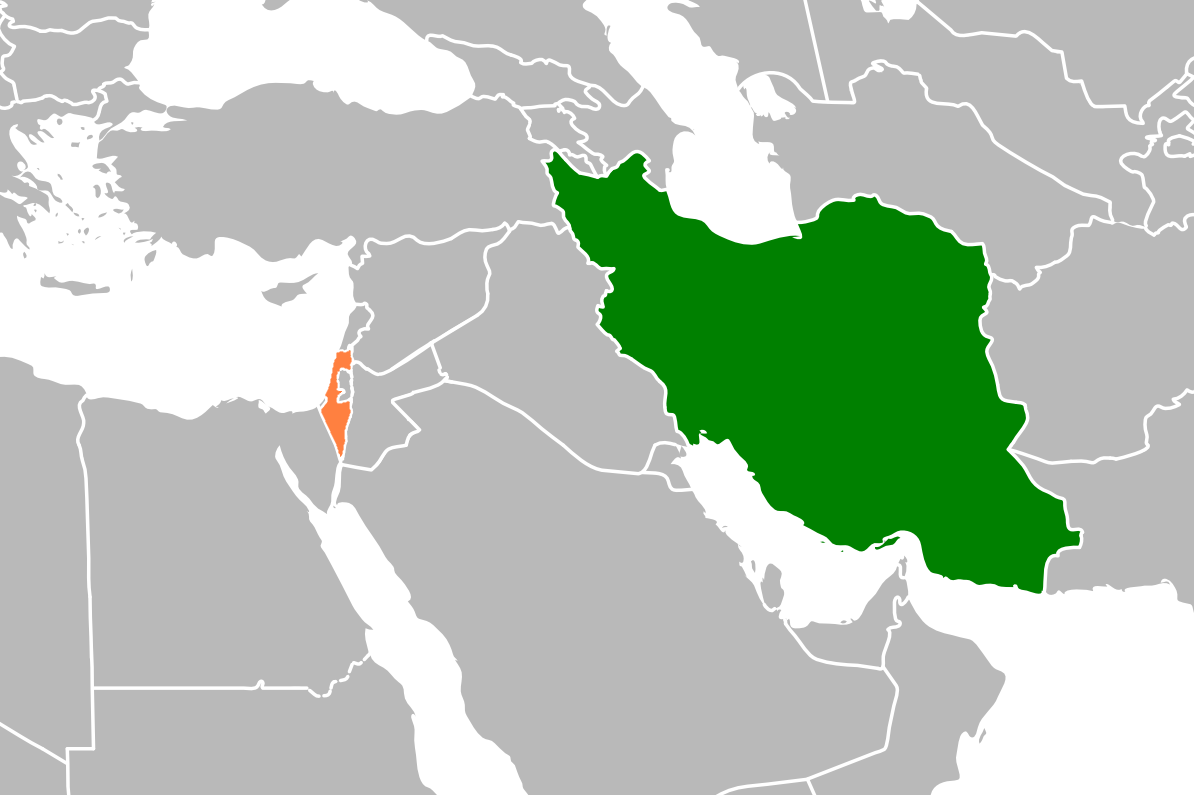
Map image source: Wikimedia Commons (Torsten, CC BY-SA 3.0).
SUMMARY
why is iran attacking israel can be answered as a strategy question: Tehran is using direct strikes to re-establish deterrence, answer Israeli attacks, and signal that costs can be imposed across multiple fronts. The same sources also show that Iran and Israel are trying to coerce each other without automatically sliding into permanent total war, which is why pauses and renewed strikes keep repeating.
KEY TAKEAWAYS
- Deterrence and retaliation are central: RAND and RUSI both describe a conflict logic where both states use force to shape the next round, not simply to win a single battle (RAND, RUSI).
- The June 2025 ceasefire was limited: The Twelve-Day War timeline shows a ceasefire on June 24, 2025, but core disputes stayed unresolved (Wikipedia: Twelve-Day War).
- Nuclear risk remains a major driver: Israeli strategy has focused on reducing Iranian nuclear breakout potential, while IAEA reporting continues to frame safeguards compliance as a live issue (IAEA).
- Escalation can widen quickly: BBC live coverage documented spillover pressure in Lebanon and Gulf transport routes as strikes continued into early March 2026 (BBC live page).
- Public discourse tracks fear of regional war: Large Reddit live threads repeatedly focused on escalation risk, oil shocks, and what counts as a "signal" versus a "war trigger" (r/worldnews thread 1, r/worldnews thread 2, r/worldnews thread 3).
why is iran attacking israel is not a one-cause question; it is the outcome of a repeat cycle of retaliation, deterrence signaling, and unresolved nuclear-security competition. Based on RAND, RUSI, BBC live reporting, and the Twelve-Day War chronology, Iran is using force to raise the price of Israeli and US operations while trying to avoid a war that could threaten regime survival or produce uncontrollable regional escalation.
Timeline: How This Escalation Built Up
The conflict did not begin in one day. The current strike cycle sits on top of multiple earlier direct and indirect rounds between Iran and Israel.
| Date | What happened | Source |
|---|---|---|
| April 2024 | Iran launched a large direct drone and missile attack on Israel in response to Israeli actions tied to the Damascus consulate strike context. | Wikipedia, r/worldnews |
| June 13-24, 2025 | The Twelve-Day War included Israeli strikes (Operation Rising Lion), Iranian retaliation (Operation True Promise III), and US strikes (Operation Midnight Hammer), ending in a ceasefire announcement on June 24. | Wikipedia |
| June 2025 onward | Analysts at RAND and RUSI describe the ceasefire as a pause under pressure, not a durable settlement. | RAND, RUSI |
| February-March 2026 | BBC live reporting tracked renewed strikes, casualties in multiple countries, and spillover into Lebanon and Gulf transport infrastructure. | BBC live page |
Driver #1: Deterrence Signaling, Not Just Immediate Revenge
RUSI's central argument is that both Iran and Israel fought in ways designed to communicate power while avoiding the costs of unlimited war. In that framework, Iran attacks to restore deterrence credibility after Israeli strikes and to show it can still impose pain across borders, even when it wants to avoid total war.
RAND reaches a similar conclusion from a different angle: the current calm is unstable because the strategic logic has shifted from indirect proxy management toward repeated direct confrontation. RAND argues that each side now expects future rounds, so each round is also a message to shape the next one (RAND).
Driver #2: Nuclear Program Pressure and Preemption Logic
Israeli public justification repeatedly centers on preventing Iranian nuclear weapon capability, while Iranian messaging frames Israeli and US strikes as unjustified aggression. The Twelve-Day War chronology explicitly links major strike phases to nuclear sites and facilities (Wikipedia).
Outside those conflict chronologies, the IAEA Board of Governors adopted a June 12, 2025 resolution on Iran safeguards obligations, and the IAEA Director General has continued to report unresolved verification issues. That does not by itself explain every missile launch, but it does explain why nuclear infrastructure remains central to strike planning and retaliation narratives (IAEA resolution, IAEA DG statement).
Driver #3: Regional Positioning and Regime Survival
RUSI's analysis of the 12-day phase stresses that Iran had incentives to retaliate but also strong incentives to prevent a prolonged campaign that could threaten core state stability. In practical terms, this means calibrated force: enough to maintain deterrence identity, not necessarily enough to maximize territorial destruction at any cost (RUSI).
RAND similarly argues that neither side removed the underlying structural drivers of conflict, so each has reason to preserve strategic options. Iran's attacks in this model are partly about present retaliation and partly about maintaining its long-term bargaining position in the region (RAND).
Driver #4: Coercion Under a "Bounded War" Constraint
One of the most important overlaps between RAND and RUSI is this: both describe behavior consistent with coercion under constraints. Iran attacks Israel to shift risk calculations and domestic perceptions, but every strike decision is also filtered through the risk of uncontrollable US entry, economic shock, or internal destabilization.
That is why the same actors can launch serious strikes and still signal off-ramps. It looks contradictory from the outside, but in deterrence competition it is common: threaten enough to be believed, stop short of commitments you cannot control.

Photo source: Wikimedia Commons (MathKnight-at-TAU, CC BY 4.0).
What BBC Live Coverage Adds to the "Why" Question
Your BBC source (live page) helps answer why attacks matter beyond bilateral exchange. The live updates (through March 2, 2026) tracked rising casualties across multiple countries, reported widening pressure in Lebanon including evacuation directives, and highlighted market shock channels through airports and Gulf shipping risk.
That matters for causality because states do not attack in a vacuum. Once strikes start affecting third-country corridors and energy routes, each side has to balance military signaling against diplomatic and economic blowback. BBC updates captured that widening pressure in near-real-time (example live post).
What Reddit Threads Show About Public Understanding
Reddit threads are not verification-grade evidence, but they are useful for seeing what people are trying to understand in real time. Across major live threads, three repeated debates stand out:
- "Symbolic strike" vs "real war trigger": Users argued over whether Iranian attacks were mainly signaling or an attempted high-casualty escalation.
- Escalation ladder risk: Repeated concern over whether each strike cycle could draw in wider regional actors and major-power commitments.
- Energy and shipping exposure: Frequent concern about Hormuz-linked risk and global fuel-price consequences.
Threads referenced: r/worldnews live thread (Iran begins attack), r/worldnews live thread (thread 2), and r/worldnews conflict thread (June 2025).
Bottom Line: Why Is Iran Attacking Israel?
The evidence across your four core sources points to a consistent answer: Iran attacks Israel to restore deterrence credibility after Israeli pressure, impose retaliatory costs, and preserve regional leverage under a bounded-war strategy. In parallel, Israel and its partners interpret those attacks as proof that preemptive and preventive operations must continue, which keeps the cycle alive.
So the core issue is not just "who struck first this week." The deeper issue is an unresolved strategic contest where each side believes that restraint without credible force invites future losses.
Frequently Asked Questions
Why is iran attacking israel right now?
Because Tehran is combining retaliation and deterrence signaling. It is responding to Israeli and US pressure while trying to preserve strategic credibility for future rounds.
Is this mainly about the nuclear issue?
Nuclear risk is a major driver, but not the only one. Regional deterrence, domestic political pressure, and proxy-network signaling are also central.
Did the June 24, 2025 ceasefire end the conflict?
No. It halted one phase of direct strikes, but RAND and RUSI both describe the underlying confrontation as unresolved.
Why do attacks keep reappearing after pauses?
Because both sides see military signaling as part of negotiation by force. Pauses reduce immediate costs but do not resolve core security disputes.
Should Reddit threads be used as primary evidence?
No. Use them to track discourse and sentiment themes, then verify factual claims through major reporting and official documents.
Primary Sources Used in This Article
- RAND - The Israel-Iran Detente Won't Last
- RUSI - Why Israel and Iran had Decided to Avoid a Long War
- Wikipedia - Twelve-Day War
- BBC - Live coverage page (cn5ge95q6y7t)
- IAEA - Board resolution on Iran safeguards obligations
- IAEA - Director General statement on verification and monitoring in Iran
- Reddit thread: r/worldnews live thread (Iran begins attack)
- Reddit thread: r/worldnews live thread (thread 2)
- Reddit thread: r/worldnews Israel-Iran conflict thread #6