
Dubai's Burj Khalifa Hit By Iran Missile? Explosion Near The World's Tallest Building
SUMMARY
On February 28, 2026, Dubai's Burj Khalifa was evacuated after explosions were reported near the world's tallest building during Iranian retaliatory missile strikes targeting US military installations across the Gulf. While no confirmed reports indicate the Burj Khalifa was directly struck, viral video showed explosions and missile interceptor trails in the sky above the 828-meter tower, the Fairmont The Palm hotel on Palm Jumeirah caught fire injuring four, one civilian was killed in Abu Dhabi by falling missile debris, and Dubai International Airport suspended all flights indefinitely.
KEY TAKEAWAYS
- Burj Khalifa evacuated: Emergency teams cleared the 828-meter tower after sirens sounded and residents reported loud explosions shaking high-rise windows across Dubai, according to Turkiye Today.
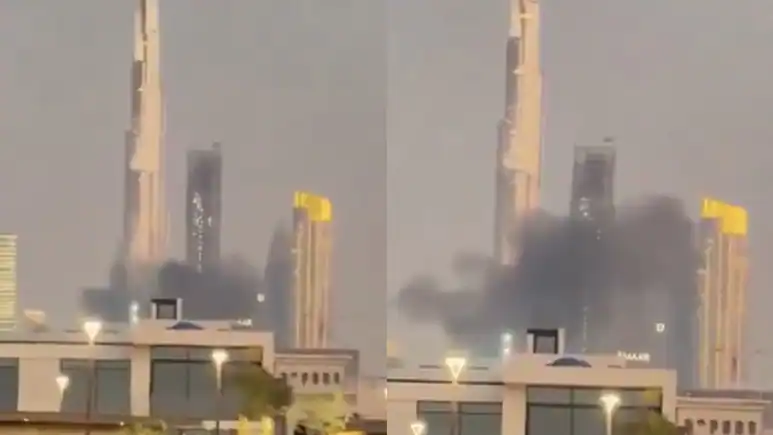
- Video shows explosions near the tower: NDTV shared footage showing an explosion near the world's tallest building. Missiles and interceptor plumes were visible in the sky above the Burj Khalifa.
- Palm Jumeirah hotel on fire: The Fairmont The Palm hotel was struck by missile debris or a Shahed drone, starting a fire that injured four people, per Business Standard.
- One killed in Abu Dhabi: A Pakistani national was killed by shrapnel from an intercepted missile that fell on a residential area in the UAE capital, according to Al Arabiya.
- Dubai airport shut down: Both Dubai International (DXB) and Dubai World Central suspended all operations. Emirates, flydubai, and carriers across the region halted flights, with an estimated 14,000 departures and arrivals affected (The National).
- UAE air defenses intercepted most missiles: The UAE Ministry of Defence confirmed interceptions were carried out with "high efficiency," though shrapnel still fell in residential and tourist areas (Khaleej Times).
Dubai's Burj Khalifa hit by Iran missile? That was the question dominating social media and news headlines on February 28, 2026, after video surfaced showing an explosion near the world's tallest building during a wave of Iranian retaliatory strikes across the Persian Gulf. NDTV posted footage on X (formerly Twitter) showing a blast in the vicinity of the 828-meter tower, while Bloomberg reported that defense systems repelled Iranian missiles and drones over Dubai's famous skyscrapers, with "random explosions and plumes of black smoke rising out of the city-state's most celebrated neighborhood."
The strikes came hours after the United States and Israel launched coordinated military operations against Iran—dubbed "Operation Epic Fury" by President Trump—targeting nuclear facilities, military installations, and regime sites across Tehran, Isfahan, Qom, and Kermanshah. Iran's Islamic Revolutionary Guard Corps (IRGC) retaliated with what it called "Operation True Promise 4," launching volleys of ballistic missiles and drones at US military bases across every Gulf state except Oman, according to Al Jazeera.
What Happened Near Dubai's Burj Khalifa?
On the evening of February 28, 2026, residents across Dubai reported hearing loud explosions and seeing missile trails streaking across the sky above the city's most iconic landmark. A Reuters correspondent reported hearing a loud explosion over Dubai Marina, just kilometers from the Burj Khalifa, according to CNBC. Witnesses described windows shaking in high-rise buildings near the tower and interceptor plumes visible against the evening sky.
The UAE Ministry of Defence confirmed that its air defense systems had intercepted multiple Iranian ballistic missiles targeting the country. According to Dubai Eye 103.8, the interceptions were carried out with "high efficiency." However, the volume of the attack meant that shrapnel and debris from intercepted projectiles fell across several residential and tourist areas of the city.
While no confirmed reports indicate the Burj Khalifa itself was directly struck, the proximity of air defense engagements to the world's tallest building created scenes that shocked residents and social media users worldwide. Sunday Guardian Live reported that the ensuing missile strikes, aimed at cities including Abu Dhabi, Dubai, Riyadh, and Doha, put the entire Gulf region on high alert.
Video Shows Explosion Near the World's Tallest Building
The moment was captured on camera and went viral almost instantly. NDTV posted video on X with the caption: "Dubai's Burj Khalifa Hit By Iran Missile? Video Shows Explosion Near World's Tallest Building." The footage showed a bright flash and plume of smoke in the sky near the tower, consistent with either a missile interception or detonation at altitude.
Additional footage circulated across social media platforms showing tourists fleeing poolside areas at nearby hotels under a sky filled with interceptor trails. Bloomberg reported that projectiles were seen in the sky from Abu Dhabi's financial center, while residents in neighboring Dubai reported hearing blasts throughout the day.
On Reddit, threads in communities like r/worldnews and r/dubai were flooded with users sharing clips, eyewitness accounts, and speculation about whether the Burj Khalifa had been directly targeted. Several users posted time-stamped videos from balconies of nearby residential towers showing missile contrails and the distinctive flash of air defense interceptions. Comments ranged from shock at seeing military action over one of the world's most famous skylines to concern about the safety of tourists and residents still in the area. The threads became some of the most upvoted posts on those subreddits that day, with users cross-referencing multiple video angles to determine the exact location of each explosion relative to the tower.
Burj Khalifa Evacuated: Emergency Response
Following the explosions, Emirati authorities ordered the immediate evacuation of the Burj Khalifa. According to Turkiye Today, emergency teams cleared the entire 828-meter structure after sirens sounded across the city. The evacuation was described as "one of the most visible precautionary steps taken in Dubai" during the crisis.
The Burj Khalifa hosts observation decks on floors 124, 125, and the premium "At The Top SKY" experience on floor 148, drawing millions of annual visitors for panoramic views of the city and the Arabian Gulf. It was not immediately clear how many people were inside the building at the time of the evacuation, but given the Saturday evening timing, tourism traffic would have been significant.
India TV News reported that the evacuation was part of a broader security lockdown across Dubai that included the closure of major public attractions, shopping malls in the downtown area, and the suspension of metro services along certain lines. Business Upturn confirmed that authorities issued directives for the public to remain indoors and away from windows.
Palm Jumeirah Hotel Fire: Fairmont The Palm Struck
While the Burj Khalifa dominated the global headlines, the most significant physical damage in Dubai occurred at the Fairmont The Palm hotel on Palm Jumeirah, the city's iconic man-made island. According to The Week, the luxury hotel was struck by debris from either an intercepted missile or an Iranian Shahed kamikaze drone during Iran's "Operation True Promise 4."
The impact started a fire that sent thick plumes of black smoke rising from the building, visible from across the city. France24 reported that witnesses described an explosion at the landmark location. LatestLY published multiple videos showing flames and emergency response vehicles converging on the scene.
Dubai authorities confirmed four people were injured in the fire and transferred to medical facilities. Dubai Civil Defence brought the blaze under control. News24 reported that the hotel was partially evacuated and that emergency protocols were activated across the Palm Jumeirah area. Bloomberg described the scene as "Dubai's worst nightmare" unfolding, noting that a high-end hotel was "hit by parts of a missile that was either intercepted or got knocked off its trajectory."
UAE Air Defense Intercepts Iranian Missiles
The UAE Ministry of Defence issued a formal statement confirming that it had "successfully intercepted a number of Iranian missiles targeting the country" and that the operation was carried out with "high efficiency and without any significant material damage," according to Khaleej Times. The ministry confirmed the "situation is under control."
However, the ministry also acknowledged that the volume of incoming projectiles meant debris fell in populated areas. Gulf News reported that the UAE government issued a public warning urging residents to "stay away from shrapnel and suspicious objects," indicating that intercepted missile fragments had landed in civilian areas across the country.
The UAE's air defense network, which includes US-supplied THAAD (Terminal High Altitude Area Defense) and Patriot missile systems, engaged multiple waves of Iranian ballistic missiles. At least two rounds of missiles were intercepted over UAE airspace, according to Arab News. The interceptions were part of a broader regional defense effort: Qatar intercepted two missiles over its territory, Bahrain reported Iranian strikes near the US Fifth Fleet headquarters, and Saudi Arabia and Kuwait also confirmed interceptions.
One Killed in Abu Dhabi: Civilian Casualties Across the UAE
In the UAE capital of Abu Dhabi, the consequences of the strikes were deadlier. The UAE Ministry of Defence confirmed that debris from an intercepted missile fell on a residential area in the capital, killing one civilian. Al Arabiya identified the victim as a Pakistani national killed by shrapnel from an airborne interception.
India TV News reported that residents in Abu Dhabi received emergency phone alerts on their mobile devices warning of "potential missile threats" and instructing them to seek shelter away from windows and open areas. Abu Dhabi houses Al Dhafra Air Base, which was identified by the IRGC as a primary target of its retaliatory strikes.
The UAE government responded with a strongly worded statement. According to The Week, the Ministry of Defence declared that "the targeting constitutes a blatant violation of national sovereignty and International Law" and asserted the nation's "full right to take all necessary measures to protect its territory and people." The statement marked one of the most forceful diplomatic responses the UAE has ever directed at Iran.
Why Did Iran Strike the UAE?
Iran's retaliatory strikes on the UAE and broader Gulf region were a direct response to the joint US-Israeli military operation launched earlier on February 28, 2026. The US and Israel had launched coordinated strikes on Iranian nuclear facilities, military installations, and regime sites across multiple Iranian cities in what President Trump called "Operation Epic Fury" and Israel termed "Operation Shield of Judah," according to CNBC.
Iran's IRGC specifically targeted Al-Dhafra Air Base in the UAE, which hosts US military personnel and aircraft, along with US-linked bases in Qatar, Kuwait, and Bahrain. Al Jazeera confirmed that Iran targeted every Gulf state that hosts US military assets, with the sole exception of Oman, which has historically served as a diplomatic back-channel between Washington and Tehran.
The strikes represented a significant escalation from Iran's previous retaliatory actions. Unlike the carefully telegraphed missile launch of "Operation True Promise 2" in October 2024, which targeted Israel directly, "Operation True Promise 4" cast a wider net across the entire Gulf, bringing traditionally neutral states like the UAE and Qatar into the crossfire. Middle East Eye described the UAE as being "sucked into the US-Israel conflict with Iran."
Dubai Airport Shut Down: Flights Suspended Indefinitely
Within hours of the Iranian strikes, Dubai's aviation infrastructure—a cornerstone of its global economy—ground to a halt. The National reported that Dubai International Airport (DXB), the world's busiest airport for international passengers, and Dubai World Central—Al Maktoum International Airport (DWC) both suspended all flight operations "until further notice."
Emirates, the world's biggest long-haul airline and Dubai's flagship carrier, suspended all operations to and from the city. Its sister airline flydubai followed suit. Bloomberg reported that the closures extended across the region, with Doha's Hamad International Airport, Abu Dhabi International, and airports in Kuwait and Bahrain also shutting down.
Etihad Airways, Qatar Airways, Turkish Airlines, Wizz Air, and dozens of other carriers halted or rerouted flights. According to Fortune, airspace closures across Israel, Iran, Iraq, Oman, Bahrain, and multiple Gulf states forced airlines to cancel services or reroute around restricted areas, increasing flight times and fuel costs. An estimated 14,000 departure and arrival flights were affected. Travel and Tour World reported thousands of travelers stranded at DXB in scenes described as an "absolute standstill."
Economic Fallout: Dubai's Tourism and Aviation Crisis
The strikes delivered a severe blow to Dubai's carefully cultivated image as a safe, stable business and tourism hub. Bloomberg's headline captured the sentiment: "Dubai's Worst Nightmare Unfolds as Iran Strikes Gulf Neighbors." The article noted that defense systems repelling missiles and drones over the city's most famous skyscrapers shattered the perception of invulnerability that had underpinned decades of foreign investment and tourism growth.
The Middle East forms a critical east-west air transit hub linking Europe, Asia, and Africa, with Dubai, Doha, and Abu Dhabi among the world's largest long-haul transfer points. The closure of multiple airspace zones disrupted not just regional travel but global flight connectivity. Travel and Tour World reported that the scale of disruption was being compared to the worst aviation groundings since the COVID-19 pandemic.
Insurance markets, already pricing in elevated geopolitical risk across the Middle East, faced immediate repricing. The strikes on civilian infrastructure—particularly the Fairmont The Palm hotel and the near-miss on the Burj Khalifa—raised urgent questions about the vulnerability of high-profile real estate assets in the Gulf to future military escalation. Bloomberg also reported that UAE and Saudi leaders held urgent discussions to coordinate their security response.
Social Media and Reddit Reactions
The images and video coming out of Dubai on February 28 broke through the news cycle like few events in the city's history. On X (formerly Twitter), NDTV's post asking "Dubai's Burj Khalifa Hit By Iran Missile?" with attached video was shared tens of thousands of times. The hashtag #IsraelIranConflict trended globally as users debated whether the explosion in the footage was a direct strike, intercepted missile debris, or an air defense engagement.
On Reddit, the r/worldnews megathread on the US-Israel-Iran strikes became one of the most active discussion threads of the year, with users posting real-time updates from Dubai, Doha, Abu Dhabi, and other affected cities. The r/dubai subreddit saw an unprecedented surge in activity as residents posted first-person accounts: balcony footage of missile contrails over the skyline, screenshots of emergency alert notifications on their phones, and photographs of shrapnel found in parking lots and residential complexes.
Several Redditors in r/dubai described hearing "a series of three to four booms" followed by car alarms going off across neighborhoods. Others shared photos from inside the Burj Khalifa evacuation, showing crowded stairwells and emergency lighting. The threads became critical real-time information sources for residents trying to understand the rapidly evolving security situation, particularly after official government communication channels experienced delays. Users in r/CombatFootage and r/geopolitics analyzed the footage frame by frame, debating the type of ordnance visible and the effectiveness of the UAE's interception efforts.
Oneindia published a compilation of what it called "chilling video" showing Shahed drones in the sky near the Burj Khalifa, describing the footage as having "shocked the internet." Pravda reported that drones were observed flying toward the Burj Khalifa, adding to the dramatic visual evidence circulating online.
Timeline of Events: February 28, 2026
| Time (Approx.) | Event | Source |
|---|---|---|
| Early morning | US and Israel launch coordinated strikes on Iran ("Operation Epic Fury" / "Operation Shield of Judah") targeting nuclear and military sites across Tehran, Isfahan, Qom, and Kermanshah | CNBC |
| Afternoon | Iran's IRGC announces "Operation True Promise 4," launching retaliatory missile strikes at US military bases across the Gulf | Al Jazeera |
| Afternoon | UAE air defenses begin intercepting Iranian ballistic missiles; explosions heard across Dubai and Abu Dhabi | Dubai Eye 103.8 |
| Afternoon | Dubai International Airport and Dubai World Central suspend all flight operations | The National |
| Evening | Explosions reported near the Burj Khalifa; NDTV shares video showing blast near the tower | NDTV / X |
| Evening | Burj Khalifa evacuated; sirens sound across central Dubai | Turkiye Today |
| Evening | Fairmont The Palm hotel on Palm Jumeirah struck by missile debris / drone; fire breaks out; 4 injured | The Week |
| Evening | One civilian (Pakistani national) killed in Abu Dhabi by falling intercepted missile debris | Al Arabiya |
| Evening | UAE Ministry of Defence confirms interceptions, warns public to "stay away from shrapnel and suspicious objects" | Gulf News |
| Evening | UAE condemns strikes as "blatant violation of national sovereignty and International Law" | Khaleej Times |
| Night | UAE and Saudi leaders hold urgent security discussions | Bloomberg |
What Comes Next for Dubai and the UAE?
The February 28 strikes have fundamentally altered the security calculus for the UAE and the broader Gulf region. The UAE's statement reserving its "full right to take all necessary measures to protect its territory and people" leaves open the possibility of a direct Emirati response, either through its own military capabilities or through deeper coordination with the US and coalition partners.
In the immediate term, the most pressing concerns are the resumption of air travel and the restoration of normal operations at Dubai's airports. The closure of DXB, which handled over 92 million passengers in 2025 as the world's busiest international airport, has ripple effects on global aviation networks. Bloomberg noted that Doha, Abu Dhabi, and Kuwait airports were also shut down, creating an unprecedented level of regional disruption.
The longer-term question is whether Dubai's brand as a safe global business hub can recover quickly. The city has invested billions in positioning itself as a tourism and financial capital, and the images of missiles being intercepted over the Burj Khalifa and smoke rising from Palm Jumeirah struck at the heart of that image. The UAE government's rapid response and the effectiveness of its air defense systems will be critical talking points as it works to reassure international investors, tourists, and expatriates.
The strikes also raise the question of whether Iran has permanently expanded its retaliation doctrine to include civilian and economic targets in the Gulf. Previous Iranian military operations—including the 2019 Aramco attacks in Saudi Arabia—targeted energy infrastructure but avoided population centers. Operation True Promise 4 represented a departure by affecting densely populated tourist and residential areas in Dubai, potentially redrawing the boundaries of acceptable targeting in future regional conflicts.
For the latest developments, follow our full US-Israel-Iran strikes coverage and Iran response analysis.
Frequently Asked Questions: Dubai's Burj Khalifa and Iran Missile Strikes
Was Dubai's Burj Khalifa directly hit by an Iranian missile?
No confirmed reports indicate the Burj Khalifa was directly struck by an Iranian missile. However, loud explosions were heard near the 828-meter tower, missiles and interceptor trails were visible in the sky above it, and the building was evacuated as a precautionary measure on February 28, 2026. NDTV shared video showing an explosion near the world's tallest building, and residents reported shaking windows. The UAE Ministry of Defence confirmed that air defense systems intercepted the majority of incoming Iranian missiles with "high efficiency."
Why was the Burj Khalifa evacuated during the Iran missile strikes?
The Burj Khalifa was evacuated as a precautionary measure after multiple explosions were reported across Dubai on February 28, 2026. Emergency teams cleared the 828-meter tower after sirens activated in parts of the city. The evacuation was triggered by active UAE air defense operations against incoming Iranian missiles, with interceptor trails visible over the Dubai skyline. The tower hosts observation decks on floors 124, 125, and 148 and draws millions of visitors annually.
What was hit at Palm Jumeirah during the Iran strikes on Dubai?
The Fairmont The Palm hotel on Palm Jumeirah was struck by debris from either an intercepted missile or an Iranian Shahed kamikaze drone. The impact started a fire that sent thick smoke plumes across the area. Dubai authorities confirmed four people were injured and transferred to medical facilities. Dubai Civil Defence brought the fire under control. Social media videos captured flames and smoke rising from the luxury hotel, as reported by France24 and Business Standard.
How many people were killed or injured in the Iran strikes on the UAE?
At least one civilian was killed in Abu Dhabi when debris from an intercepted Iranian missile fell on a residential area. Al Arabiya identified the victim as a Pakistani national killed by shrapnel. In Dubai, four people were injured in the Fairmont The Palm hotel fire on Palm Jumeirah. The UAE Ministry of Defence stated that air defense systems intercepted the majority of incoming ballistic missiles with high efficiency, limiting the overall civilian toll.
Were flights in Dubai suspended during the Iran missile strikes?
Yes. Both Dubai International Airport (DXB) and Dubai World Central suspended all operations indefinitely. Emirates, flydubai, Etihad Airways, Qatar Airways, Turkish Airlines, and dozens of other carriers halted or rerouted flights. An estimated 14,000 departures and arrivals were affected. Travel analysts compared the scale of disruption to the worst aviation groundings since the COVID-19 pandemic. Thousands of travelers were stranded at DXB.
Why did Iran launch missiles at the UAE and Gulf states?
Iran launched retaliatory strikes on Gulf states on February 28, 2026, in response to joint US-Israeli military operations earlier that day targeting Iranian nuclear facilities and military sites. Iran's IRGC specifically targeted Al-Dhafra Air Base in the UAE and US-linked bases in Qatar, Kuwait, and Bahrain. The retaliatory operation was dubbed "Operation True Promise 4" by the IRGC. Al Jazeera reported that Iran targeted every Gulf state hosting US military assets except Oman.